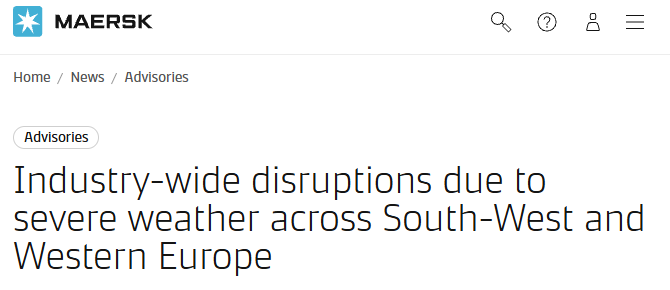
When natural forces override technological planning, the powerful Atlantic waves have disrupted more than just voyage schedules; they have fractured the fragile promise of "on-time delivery" within global supply chains. The operational alerts from companies like Maersk and Hapag-Lloyd function as critical notices, signaling a significant blockage in the logistics arteries of the trans-Atlantic corridor.
The chain reaction from vessels being forced to anchor and plummeting port productivity is systemic. Cargo originating from the Far East will face congestion at American ports, while European exports will suffer from chaotic vessel schedules. For many businesses, this situation risks triggering a cascade of problems including critical inventory shortages, production line stoppages, or failures to meet client commitments.
Faced with this systemic risk, the traditional freight forwarding service model is under immense pressure. In times of widespread schedule collapse, the value of a service provider that can only offer standard booking and customs clearance services, and merely forwards carrier delay notices, diminishes significantly. What clients urgently require is a partner capable of providing clarity and actionable solutions amidst the chaos.
This need manifests in several key areas: the ability to swiftly devise alternative intermodal solutions based on global network data; the capacity to provide accurate delay forecasts and dynamic contingency schedules; and the capability to coordinate with various stakeholders to prioritize the handling of critical shipments. This evolution from being an "information relay" to an "emergency coordination center" represents a fundamental differentiator for logistics providers during a crisis.
Effective communication and transparency are paramount during such disruptions. The market is flooded with uncertainty and often contradictory information. The ability to provide clients with clear, accurate, and timely updates becomes a critical service in itself. When countless shippers search online for information on "U.S. East Coast route delays" or "European port updates," establishing one's platform as a reliable source of authoritative information and practical guidance is crucial. This determines which partners clients will turn to during the crisis and continue to rely on long after it has passed.
Therefore, navigating this disruption requires more than operational adjustments; it demands a strategic approach to communication and client support. Providers that can effectively manage information, offer proactive solutions, and maintain trust through transparent updates will not only help their clients weather the immediate storm but also strengthen those partnerships for the future.